

The Halftime Report on Fandom Itself: Why The Legacy Sports Fan is a Dying Breed
The sports fan landscape is splitting into two distinct groups. Discover why traditional marketing fails the “New Wave” of fans and how brands can connect with this digital-first, player-focused, and socially-conscious audience.

If you think the biggest story in sports is what’s in the box score, you’re watching the wrong game. The real action isn’t on the field or the court; it’s happening in our living rooms, on our phones, and in the data that shows who’s even paying attention anymore. That archetypal American sports fan—the one who bleeds team colors and builds their whole Sunday around a three-hour broadcast? They’re becoming a relic.
On the surface, things look fine. About 47% of U.S. adults say they’re sports fans. But that number is pretty misleading. Underneath, the ground is shifting, and it’s splitting the world of sports fans right in two. We’re in the middle of a huge generational handoff.
For brands, leagues, and media practitioners still using the old playbook, this isn’t just a blip. It’s a huge trend. A one-size-fits-all approach to sports marketing is now a one-size-fits-none problem, and it’s a great way to waste money and annoy the people you’re trying to connect with.
The Big Split: The Old Guard and The New Wave
The American sports scene has basically split into two different worlds. Figuring out which one you’re talking to (and how to talk to them) is the only thing that matters now.
The Old Guard: Think NFL and MLB. These guys are the titans. They have huge, high-income fanbases that are…well, getting older. The average diehard fan is 47, and almost half of NFL viewers are over 55. Their power comes from tradition, hometown pride and tuning into the game on regular TV. They’re the foundation of the old model, and they’re a massive, rich audience that still gets into the rhythm of a season. For them, being a fan is a ritual. But, their numbers are shrinking. Gen Z is the least likely group to call football their favorite sport, and that signals a slow but sure decline. This ecosystem is all about holding onto market share, not chasing explosive growth.
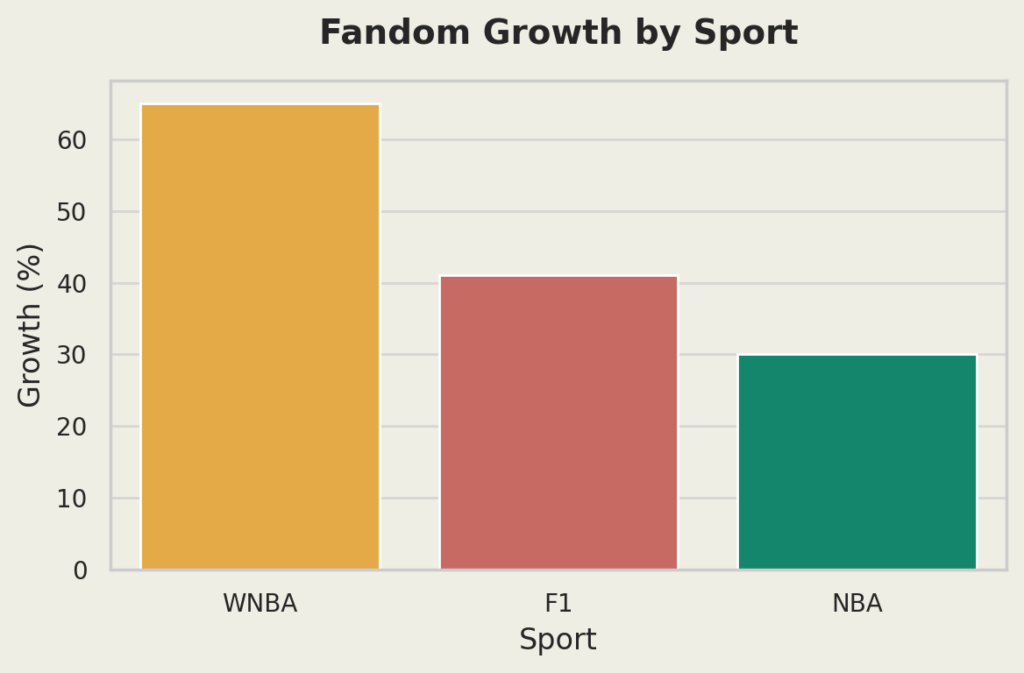
The New Wave: This is where all the momentum is. We’re talking about the NBA, WNBA, Formula 1, and soccer. These sports are seeing amazing growth, and their fans look totally different from the ones in the Legacy camp. They’re younger, more of them are women, and they’re way more diverse. The NBA’s fanbase, for instance, is 44% under 34 and 40% non-white. The WNBA saw its core fandom jump by a wild 65% in one year, while F1 grew by 41% in the U.S., mostly by winning over Gen Z. These fans are digital-first. For them, the live game is just one part of a huge, always-on world of content. They don’t just follow teams; they follow players, stories, and the whole culture around the sport. It’s as much about the vibe as it is about the final score.
The Game Has Been “Unbundled”
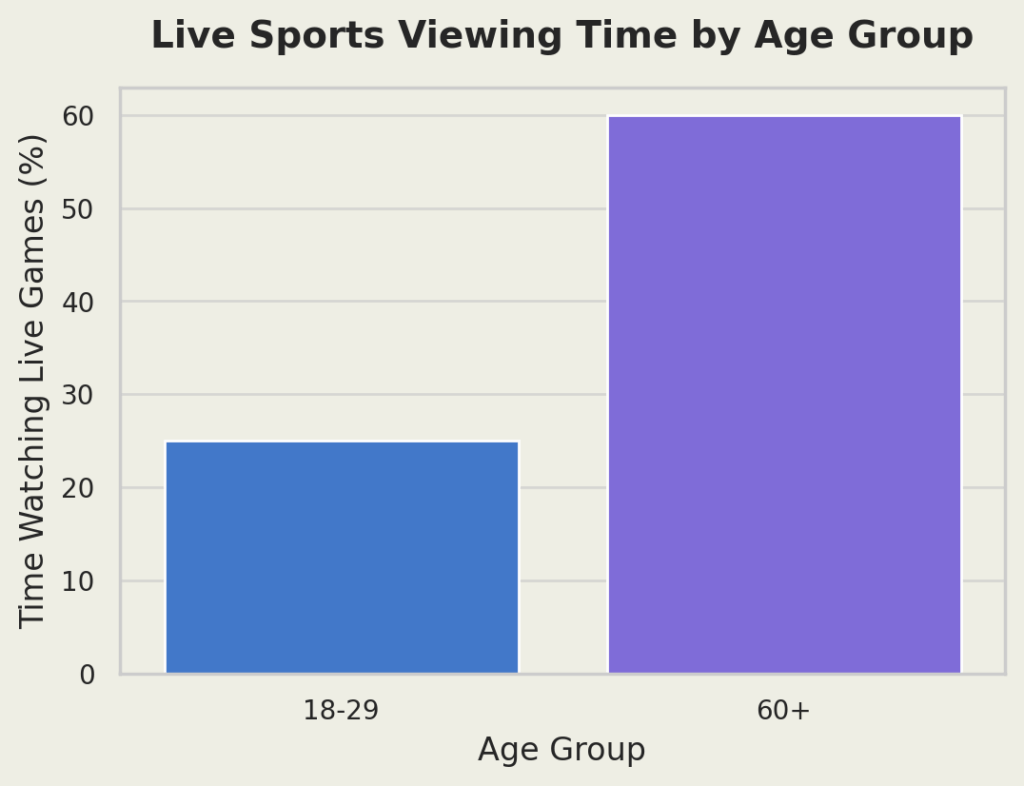
The second huge change is how people watch. The idea of sitting through a whole three-hour game is becoming pretty rare for younger fans. One survey found that fans aged 18-29 only spend about 25% of their sports time watching live games. For fans over 60, it’s 60%. That’s not just a small change; it’s a complete shift in how people pay attention.
So, where did all that attention go? It’s been broken up into a million little “snackable” pieces that people consume across a bunch of different platforms, mostly on their phones.
- It’s a Highlight World: The main event isn’t the full game anymore. It’s the highlight, the meme, the hot take, the clip that goes viral. This is all because we live on our phones and our attention spans are, let’s face it, shorter. Places like TikTok, Instagram, and YouTube are where sports culture really happens now, and they’re built for short, fun, personality-packed videos. The game itself is just the raw material for a week’s worth of content.
- The Second Screen is a Must: Watching a game isn’t a passive thing anymore. It’s a full-on multitasking event! Gen Z viewers are always on another device—checking stats, reading what analysts are saying, chatting with other fans, playing games, or ordering food. This turns watching a game by yourself into something social and interactive. The main broadcast on the TV often just becomes background noise to a more exciting digital conversation.
- It’s All About the Players: The old model was city, team, fan. The new model is player, brand, follower. Younger fans, especially in the NBA, are way more likely to follow their favorite players from team to team. Athletes aren’t just employees anymore; they’re huge media personalities with their own brands. They can connect directly with millions of fans without needing the traditional media to do it for them. When 63% of Gen Z fans say that content from their favorite athletes gets them more into a sport, you know there’s been a massive power shift from the teams to the players themselves.
This “unbundling” has totally shaken up the world of media rights. The future isn’t one network owning everything. It’s a messy, expensive mix of regular channels and streaming services—like Amazon having NFL games, Apple having MLS, and Netflix getting into *checks notes*…the WWE. The value isn’t just in the live broadcast anymore. It’s in the rights to every single clip, every behind-the-scenes show (hello, Drive to Survive!), and all the other content that feeds the 24/7 sports machine.
Fans Want to Be Part of the Action
The last big change is in how fans think. They’ve gone from being passive spectators to active participants; being a fan is part of their identity, and they want to get involved.
This shows up in a few key ways.
First, the obvious one: sports betting. For younger NFL fans (ages 21-29), betting is a huge reason they engage. They’re three times more likely than older fans to place a bet every week. It gives them a personal stake in the game and turns watching into an active, analytical challenge.
Second is the explosion of sports like pickleball. People love it because it’s social, easy to get into, and fun. It’s the real-world version of wanting to get off the couch and into the game, and it taps into that basic human need for community and competition.
Finally, and this is a big one for brands, it’s about values. The new generation of fans expects the leagues, teams, and athletes they follow to stand for something. They’re super skeptical of old-school advertising and really value authenticity. They’re drawn to women’s sports not just for the awesome games, but to support strong role models and push for equality. That’s not just a nice thought; it’s a powerful force that can get 92,000 people to show up for a college volleyball game!
So, What’s the Play for Brands?
Alright, so what should you do about all this?
- Pick a Side (Sort Of): You’ve got to recognize that there are two different worlds now. Is your brand a better fit for the stable, high-income, older audience of the NFL? Or does it make more sense to go after the dynamic, fast-growing, and messy world of the WNBA and F1? You really can’t target both with the same message. One is a TV ad play about tradition; the other is a TikTok and influencer play about what’s cool right now.
- Focus on the Players: If you’re going after that younger crowd, you need to shift your focus from the team’s logo to the name on the back of the jersey. Athletes are the best and most trusted way to reach Gen Z. Partner with them, let them be themselves, and build campaigns around their real stories (even if that means giving up a little of the control that marketers usually like to have).
- Sponsorship Isn’t Just a Logo Anymore: The old method of just putting your logo everywhere is dead. Gen Z can spot a fake, purely transactional partnership from a mile away. Today, the most valuable thing a team or league can offer is its real, authentic connection with its fans. When your brand partners with them, you’re borrowing that trust. The goal isn’t just eyeballs; it’s getting a transfer of credibility. And if your brand’s values don’t line up with the fans’, it’s not just a simple PR problem—it’s a serious threat to your investment.
- Think Like a Media Company: Your job isn’t to interrupt the game with a :30 ad anymore. Your job is to be part of the 24/7 conversation about the game. You need to be creating the highlights, the memes, the behind-the-scenes content, and the fun, game-like experiences that this new generation of fans is hungry for.
The game is changing, whether the old guard wants to admit it or not. The new wave of fans is already here, and they’re not sitting on the couch waiting for your commercial. They’re creating, they’re participating, and they’re writing their own rules for what it means to be a fan. If you ignore them, you’re spotting your competition some serious points.
New Insights Sent Directly to You
The world is changing! Sign up and get timely information about our latest research and insights.